
What does microneedling do?
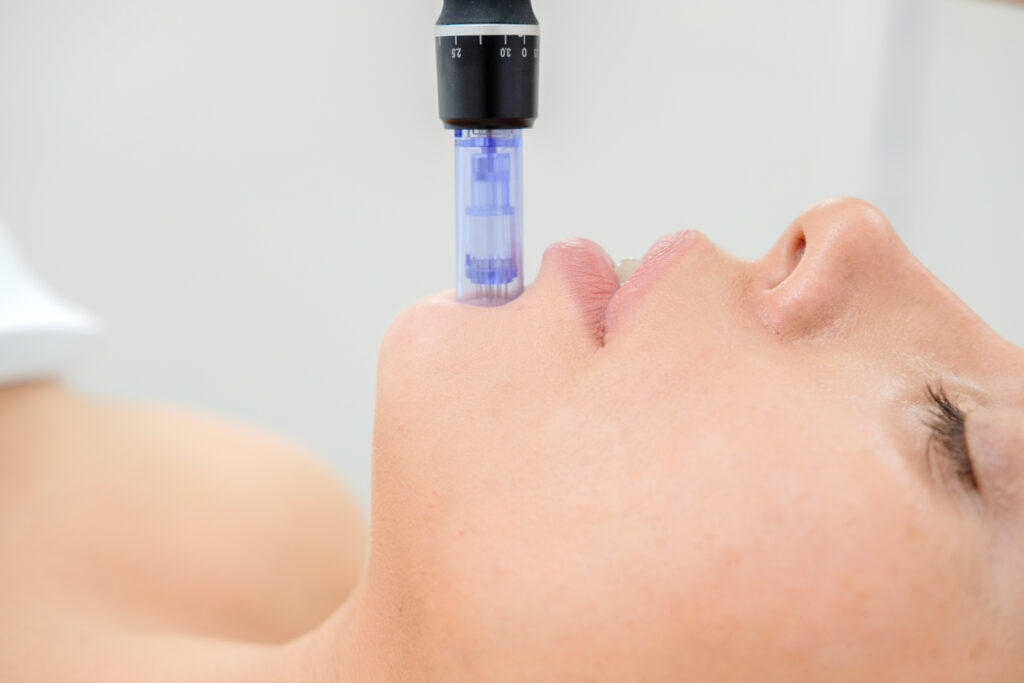
Microneedling uses a device fitted with very fine, sterile needles that create a series of tiny, controlled channels in the upper layers of the skin. These micro-channels are small enough to heal quickly, yet your body still registers them as injuries that need repair. That signal is the entire point. Your skin answers by switching on its natural wound healing response, and that response is where the real work happens.
How Microneedling Works Beneath the Surface?
Once the skin detects these micro-channels, fibroblasts (the cells that produce structural proteins) move into the area and begin manufacturing fresh collagen and elastin. Collagen gives skin its firmness and structure, while elastin lets it stretch and bounce back. Over the following weeks, your body lays down new fibers and reorganizes older ones, gradually rebuilding the support network that keeps skin looking taut and refreshed.
The numbers behind this process are striking. Histological studies have found that a series of four microneedling sessions spaced about a month apart can produce up to a 400 percent increase in collagen and elastin deposition six months after treatment (National Library of Medicine). That deeper remodeling is why microneedling is often described by its clinical name, collagen induction therapy.
Why the Timeline Matters More Than the Appointment
Dermal fillers are injectable gels, most commonly made from hyaluronic acid, that restore lost volume beneath the skin. Hyaluronic acid occurs naturally in the body, where it binds water molecules and keeps tissue hydrated and plump.
As we age, our natural stores deplete. Injectable fillers replace what time has taken, smoothing wrinkles, lifting sagging tissue, and enhancing facial contours without surgery.
The results are immediate, the recovery is minimal, and the effects are reversible if needed. Most fillers last between six and eighteen months depending on the product used and the area treated.
What Microneedling Helps With and What to Expect
Seeing the common uses laid out side by side makes it easier to picture how the treatment might fit your own concerns.
Concern | How microneedling helps | Typical approach |
|---|---|---|
Acne scars and texture | Breaks up old scar tissue and prompts new collagen to fill depressed areas | A series, often 3 to 6 sessions |
Enlarged pores | Strengthens the surrounding collagen so pores appear tighter | Maintenance every few months |
Fine lines | Rebuilds the collagen scaffolding that softens early wrinkling | Series with periodic touch-ups |
Uneven tone and dullness | Encourages cell turnover for a brighter, fresher surface | Often paired with facials |
Stretch marks | Stimulates repair in stretched, thinned skin on the body | Multiple sessions spaced weeks apart |
The Concerns Microneedling Handles Well
Microneedling has become a go-to option for patients dealing with the texture and tone issues that creams alone rarely resolve. Acne scarring is one of its most studied applications, since the controlled injury helps break down old scar tissue while prompting fresh collagen to fill in the indentations. Patients who have lived with shallow, rolling scars for years often see steady improvement across a course of treatment.
The treatment is just as valuable for everyday signs of aging and sun exposure. Fine lines, a rough surface, and pores that have started to look larger all respond to the renewed collagen activity. For concerns on the body rather than the face, our microneedling for stretch marks and scars guide looks at how the same principle applies to stretched skin on the arms, thighs, and abdomen.
Patients with sensitive or reactive skin sometimes worry that any needling treatment will feel too harsh. For them, a gentler option such as our SQT biomicroneedling treatment can be a better starting point, since it works with the skin’s barrier while still encouraging renewal.

Good to know. At Wright’s Med Spa, our microneedling treatments are performed with the Rejuvapen NXT, an FDA-cleared device that uses a vertical needling motion for precise, even depth across the treatment area. You can read more about our approach and request a visit on our microneedling in Bethlehem, Nazareth, and Stroudsburg PA page.
What a Microneedling Session Looks Like
Your appointment begins with a cleanse and a topical numbing cream, which sits on the skin for roughly twenty to thirty minutes so the treatment stays comfortable. Once the area is numb, your provider moves the device across the skin in steady passes, adjusting the needle depth to match the concern being treated and the thickness of the skin in each region. A full face usually takes fifteen to thirty minutes of active treatment.
Many providers apply a serum during or right after the passes, since the fresh micro-channels let products like hyaluronic acid absorb more deeply than they would on intact skin. Afterward your skin will look pink and feel warm, much like a day at the beach without sunscreen. That flush usually fades within a day or two.
Caring for your skin afterward
- Keep the skin clean and well hydrated for the first few days, and hold off on active ingredients like retinol and exfoliating acids until your provider clears you to resume them.
- Protect the treated area with a broad spectrum sunscreen, since new skin is more vulnerable to sun damage during the healing window.
Professional Microneedling versus at-Home Rollers
The popularity of microneedling has filled drugstore shelves with at-home rollers, and patients often ask whether those tools do the same thing. The short answer is that they work on very different scales. At-home rollers use shallow needles meant only to help products absorb a little better, and they cannot safely reach the depth where real collagen remodeling takes place. A professional device delivers controlled, sterile depth that a roller cannot match, and a trained provider adjusts that depth for each part of the face.
Sterility is the other meaningful difference. Reused home rollers are a common source of irritation and infection, since they are difficult to clean thoroughly between uses. In a clinical setting, every needle cartridge is single use, the skin is properly prepped, and aftercare is guided. The result is a treatment that reaches deeper, stays safer, and gives you something a roller never can, which is professional judgment about what your skin actually needs.
How Microneedling Fits with your other Treatments
Microneedling rarely works in isolation in a thoughtful skincare plan. Because it improves how well products penetrate, it pairs naturally with hydrating and resurfacing treatments. Patients who enjoy regular professional facial treatments often schedule microneedling as a periodic boost between visits, while a Hydrofacial and jet peel treatment can be a gentle way to keep skin clear and luminous in the weeks afterward.
For collagen related goals, microneedling also complements injectables. Where dermal fillers restore volume that has been lost over time, microneedling improves the quality and texture of the skin’s surface, so the two address different layers of the same concern. Your provider can help you sequence treatments so they build on one another rather than competing for healing time.
Worth noting. Microneedling suits most skin, but not everyone at every moment. Patients with active acne breakouts, certain skin infections, or a tendency toward keloid scarring should review timing with a provider first. Those who are pregnant are generally advised to wait. A consultation is the safest way to confirm the treatment fits your skin and your health history.
When you will see results and how long they last
Some patients notice a fresh glow within a week as the early healing settles, but the firming and smoothing effects build gradually over the following one to three months as new collagen matures. Because the skin keeps aging and producing collagen at its own pace, results are not permanent. Most patients hold on to their improvements with a session every few months, adjusted to their goals and skin type.
For patients planning a longer series, Wright’s Med Spa offers membership options and flexible payment plans that make consistent treatment easier to budget. You can also review current rates on our price list before your visit.
Frequently Asked Questions
Does microneedling hurt?
With numbing cream applied beforehand, most patients describe the sensation as a light vibration or mild prickling rather than pain. Sensitive areas near the hairline and jaw can feel a little sharper.
How many sessions will I need?
It depends on your concern. Texture and tone often improve with three to four sessions, while deeper acne scars may call for five or six. Your provider will map out a plan during your consultation.
How much downtime should I expect?
Most people return to normal activities the next day. Redness and a slightly tight feeling are common for a day or two, and any light flaking usually clears within a week.
Can microneedling be done on areas other than the face?
Yes. The neck, chest, hands, and body areas with stretch marks all respond well, though body skin often needs more sessions than the face.
Is microneedling safe for deeper skin tones?
It is generally considered one of the safer resurfacing options across skin tones, because it does not rely on heat or light that can affect pigment. Your provider will still tailor the depth and aftercare to your skin.
How far ahead of an event should I schedule it?
Give yourself at least two weeks so any redness fully settles and the early collagen response has time to start showing.
The Clearest Answer Starts with a Conversation
The best way to find out what microneedling can do for your skin is a conversation with a provider who can look at your concerns in person. At Wright’s Med Spa, every treatment plan begins with an honest assessment of your skin and your goals, so the approach we recommend actually fits your life. We welcome patients at our three Pennsylvania locations in Nazareth, Bethlehem, and Stroudsburg. Contact us today to schedule your consultation and see whether microneedling is the right next step for you.
References
Bonati LM, et al. Microneedling. StatPearls, National Library of Medicine, NCBI Bookshelf. ncbi.nlm.nih.gov/books/NBK459344
Singh A, Yadav S. Microneedling: Advances and widening horizons. Indian Dermatology Online Journal, 2016. pmc.ncbi.nlm.nih.gov/articles/PMC4976400
Aust MC, Fernandes D, Kolokythas P, Kaplan HM, Vogt PM. Percutaneous collagen induction therapy: an alternative treatment for scars, wrinkles, and skin laxity. Plastic and Reconstructive Surgery, 2008.
